EN
EN

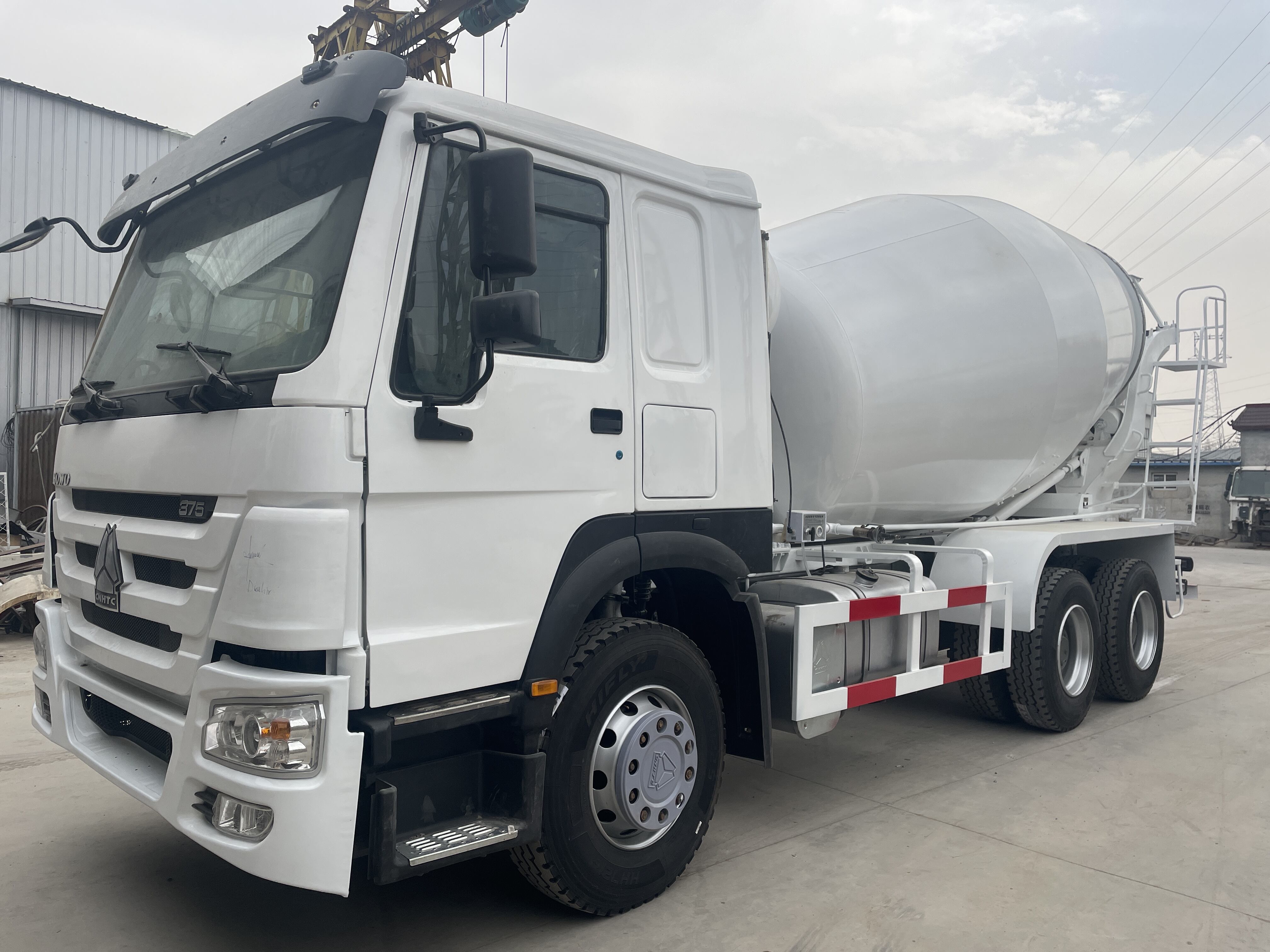
Drum Rotation Strategy: Balancing Agitation, Segregation, and Hydration
Maintaining mix integrity during transit requires precise drum rotation control. Incorrect speeds risk material segregation or premature hydration—both of which compromise structural strength upon delivery.
Optimal RPM Ranges to Prevent Segregation and Premature Setting
The drum on a concrete mixer truck usually spins somewhere between 2 and 6 revolutions per minute when it's moving along. If the drum turns too slowly under 2 RPM, the materials start settling and separating out. But crank it up past 6 RPM and something else happens bad the bigger chunks get thrown against the sides and pulled away from the wet mix. Special types of concrete need even more careful handling. Take self consolidating concrete for instance, which really prefers things to stay within 3 to 4 RPM range. What about hydration? That matters too. When trucks sit still or move so slow the drum barely turns, concrete starts setting faster especially on hot days over 30 degrees Celsius. On the flip side, if the drum spins too fast, all that movement creates extra heat, which makes everything set quicker than planned.
Constant Low-Speed vs. Intermittent High-Speed Agitation: Evidence-Based Trade-Offs
Keeping things moving slowly at around 1-2 RPM cuts down on power usage by about 15%, but there's a catch. The mix can start to settle in spots and lose its uniform consistency over time. On the flip side, short bursts of faster mixing at 4-5 RPM help redistribute particles throughout the batch, which becomes really important during those long transport runs lasting more than 90 minutes. But here's the tradeoff: every time we kick it up a notch, the hydraulic system takes on an extra 20-30% workload, which means parts wear out faster. What works best according to field tests? A mix of both approaches. Run continuously at low speed most of the time, then throw in two minutes of higher agitation every hour or so. This keeps the concrete from separating while not beating up the equipment too badly. Most contractors find this method keeps their mixes within ASTM C94 standards for nearly all deliveries that take less than two hours on the road.
Internal Drum Geometry: Blade Design and Flow Control for Consistent Homogeneity
Helix Angle and Pitch Optimization for Axial Conveyance and Uniform Shear
The angle at which mixer truck blades are set has a major impact on how concrete flows while being transported. Angles between about 25 and 35 degrees work best for moving material along the axis of the drum while keeping things from spreading out too much radially, which leads to separation problems. This setup finds a good middle ground between materials settling due to gravity and getting dispersed by centrifugal force. When the blades have varying pitches across their length, it helps fight against layering issues particularly noticeable in wetter mixes where heavier particles want to settle down. Some computer simulations suggest these kinds of blade designs can make mixing processes around 15 percent more efficient than when done poorly. And there's another trick manufacturers use too: blades with different depths adjust better as the mix changes consistency over time, keeping everything mixed evenly without creating those pesky spots where water concentrates too much.
Auger Configuration Impact on Slump Retention in Sensitive Concrete Mixes
The shape and design of augers plays a big role in how well concrete mixtures retain their slump when they contain materials like fly ash, silica fume, or various polymers. When using shallow flight augers, workability stays better because these designs reduce the shearing forces that cause water to migrate through the mix. Tests following ASTM C94 standards show slump remains stable within about half an inch even after 90 minutes in transit. Things change quite a bit with steeper auger angles though. These configurations tend to speed up slump loss by roughly 20% in concretes modified with polymers. Getting the right gap between the auger and the drum wall matters too. Most experts recommend keeping this space around 3 to 5% of the drum's total diameter. This creates just enough slip between components to stop unwanted compaction but still maintains proper mixing action. For self-consolidating concrete (SCC), finding this balance becomes critical since excessive agitation can actually break down the mix's viscosity and ruin its ability to consolidate properly on its own.
Transit-Induced Degradation Mitigation: Time, Temperature, and Agitation Synergy
The Time–Temperature–Agitation Triad and ASTM C94 Compliance for Ready-Mix Delivery
Keeping concrete in good shape while transporting it depends on getting three things right at once: how long it's been moving, what the outside temperature is doing, and how vigorously the drum is spinning. When trucks take too long to deliver, the mix starts to break down and separate. If it gets hotter than about 25 degrees Celsius (around 77 Fahrenheit), the chemical reactions inside speed up dramatically, sometimes making the concrete set before it should. On the other hand side of things, if the drum doesn't spin enough, materials settle out of the mix. But spin it too fast and we actually create problems because the force can damage the mixture structure. These issues are covered in detail by ASTM C94 standards which provide specific guidelines manufacturers need to follow for proper handling during transport.
- Delivery time limits: 90 minutes after batching or before 300 drum revolutions
- Slump retention: Minimum 75% of initial value upon arrival
- Temperature control: Mixes maintained between 10–32°C (50–90°F)
Optimal mitigation integrates continuous low-RPM agitation (2–6 RPM) with thermal management—such as insulated drums or cooling additives in hot climates—to prevent viscosity breakdown and ensure compressive strength meets project specifications. This triad-based approach reduces rejected loads by 18%.
FAQ
What is the optimal RPM range for concrete drum rotation?
The optimal RPM range for concrete drum rotation is typically between 2 and 6 revolutions per minute. Special types of concrete like self-consolidating concrete prefer a range of 3 to 4 RPM.
How does drum speed affect concrete quality?
If the drum turns too slowly, materials may settle and separate. If it spins too fast, the bigger chunks may pull away from the wet mix, and the extra movement can create heat, causing the mix to set more quickly.
What is the recommended strategy for drum agitation during transit?
A mix of continuous low-speed (1-2 RPM) and intermittent high-speed agitation (4-5 RPM) every hour is recommended to keep concrete from separating without increasing equipment wear significantly.
Why is the helix angle of mixer truck blades important?
The helix angle, typically between 25 and 35 degrees, helps balance the flow of concrete along the drum's axis and prevents radial spreading that leads to separation problems.
How do auger configurations impact sensitive concrete mixes?
Shallow flight augers improve workability by reducing shearing forces, while steeper angles can increase slump loss. The gap between the auger and the drum wall also affects mix consistency, especially important in self-consolidating concrete.
What are the ASTM C94 standards for ready-mix concrete delivery?
ASTM C94 standards include delivery within 90 minutes of batching or before 300 drum revolutions, a minimum of 75% slump retention, and maintaining mix temperature between 10-32°C (50-90°F).
Table of Contents
- Drum Rotation Strategy: Balancing Agitation, Segregation, and Hydration
- Internal Drum Geometry: Blade Design and Flow Control for Consistent Homogeneity
- Transit-Induced Degradation Mitigation: Time, Temperature, and Agitation Synergy
-
FAQ
- What is the optimal RPM range for concrete drum rotation?
- How does drum speed affect concrete quality?
- What is the recommended strategy for drum agitation during transit?
- Why is the helix angle of mixer truck blades important?
- How do auger configurations impact sensitive concrete mixes?
- What are the ASTM C94 standards for ready-mix concrete delivery?