EN
EN

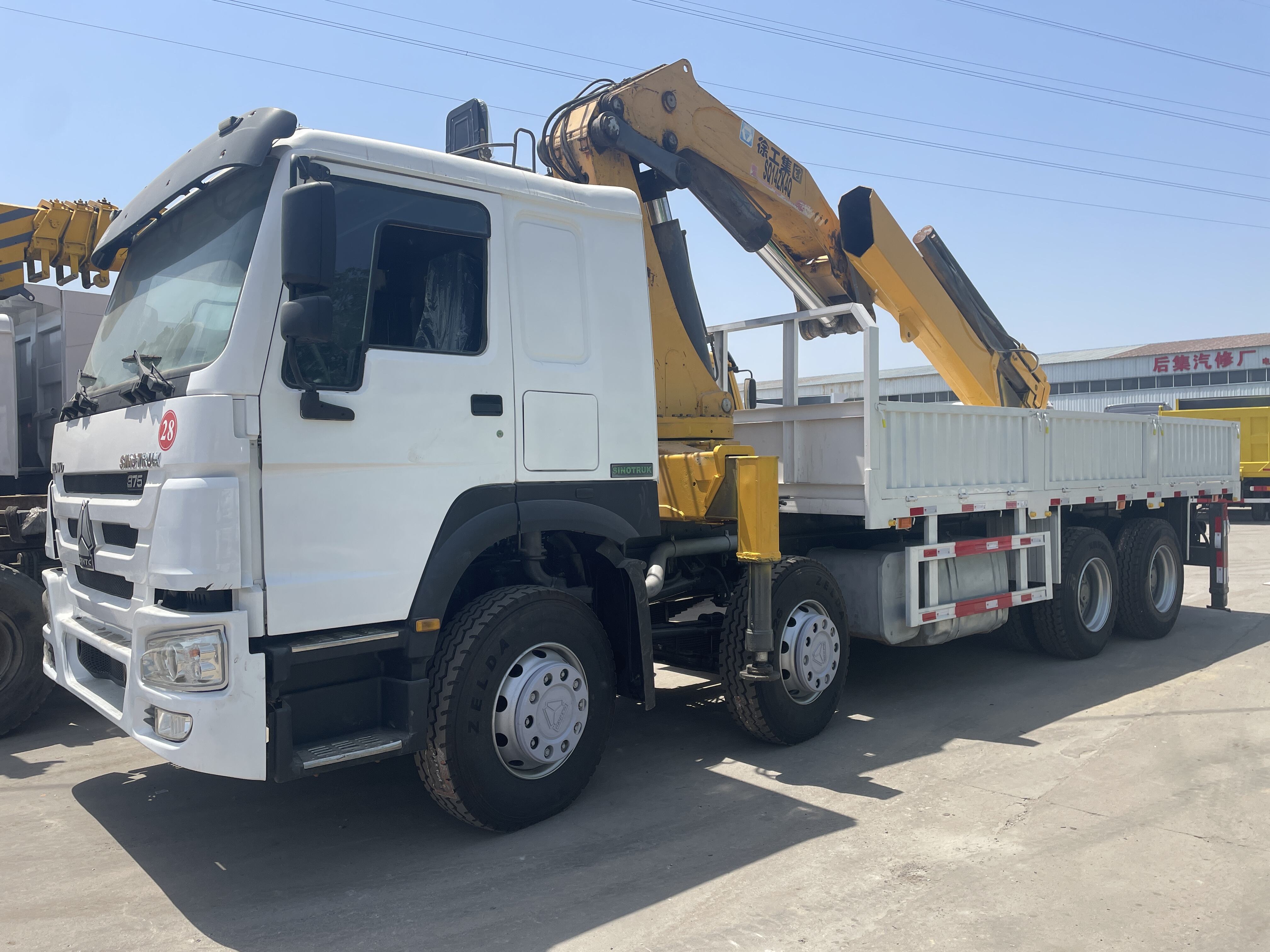
Crane trucks, or mobile cranes, are indispensable workhorses in construction, logistics, manufacturing, and a wide range of industrial sectors, combining the mobility of a heavy-duty truck with the lifting power of a crane to deliver on-site lifting and material handling solutions. Shandong Lujun Naxin International Trade Co., LTD, a leading manufacturer and supplier of commercial vehicles with ISO9001-2015 certification and a reputation for quality across the globe, offers a premium range of crane trucks engineered for durability, performance, and versatility. However, even the most high-quality crane truck will fail to deliver optimal efficiency if its boom length and capacity are not matched to the specific requirements of the job. Selecting the right boom length and capacity is a critical decision that directly impacts lifting safety, operational speed, project costs, and overall productivity. In this guide, we share expert tips for choosing the ideal boom length and capacity for your crane truck, helping you maximize efficiency, minimize downtime, and unlock the full potential of your equipment.
First and foremost, conduct a detailed job site analysis to define your lifting requirements—this is the foundation of all boom length and capacity decisions. Before selecting a crane truck, you must evaluate the unique conditions of the job sites where the equipment will be used, including the maximum lifting height required, the horizontal reach needed to access lifting points, the weight and dimensions of the loads to be lifted, and the physical constraints of the site such as space limitations, obstacles (e.g., buildings, trees, power lines), and ground conditions. For example, a construction project in a dense urban area may require a crane truck with a long boom for extended horizontal reach to lift materials to upper floors of a building, while a warehouse or manufacturing facility may need a shorter, more maneuverable boom for indoor lifting operations with low clearance. Shandong Lujun Naxin’s team of technical experts can work with you to conduct a comprehensive site analysis, leveraging their 15+ years of industry experience to identify your exact lifting needs and recommend the most suitable crane truck specifications.
When evaluating boom capacity, the golden rule is to select a rating that exceeds the maximum load weight you anticipate lifting—never cut corners by choosing a capacity that only matches the nominal load weight. Crane truck boom capacity is not a fixed number; it varies based on the boom’s extension length, the lifting angle, and the position of the outriggers. As the boom is extended or the lifting angle becomes shallower (closer to horizontal), the crane’s effective lifting capacity decreases significantly due to increased leverage on the boom and the truck’s chassis. For example, a crane truck with a 10-ton capacity at a 5-meter boom extension may only have a 3-ton capacity at a 15-meter extension. To account for this, you must calculate the maximum working load moment (WLM), which is the product of the load weight and the horizontal distance from the crane’s center of rotation to the load. The WLM must never exceed the crane truck’s rated load moment for the specific boom configuration. Additionally, you should factor in a safety margin of 10-20% to account for unexpected variables such as load imbalance, wind resistance, or slight variations in load weight. Lujun Naxin’s crane trucks are available with a wide range of boom capacities, from light-duty models for small loads to heavy-duty versions for industrial lifting, all designed to meet strict safety standards and deliver reliable performance under real-world conditions.
Selecting the right boom length is equally important, and it must be aligned with both the maximum lifting height and horizontal reach required for your operations. Boom length is typically measured as the total extended length of the telescopic sections, and it determines how high and how far the crane can lift a load. To calculate the required boom length, you need to consider two key measurements: the maximum lifting height (the vertical distance from the ground to the highest point the load needs to reach) and the maximum working radius (the horizontal distance from the crane’s center of rotation to the load’s lifting point). A common mistake is to only consider lifting height and overlook working radius, which can result in a boom that is too short to reach the load safely. For example, if you need to lift a load to a height of 20 meters with a working radius of 15 meters, a boom with a straight length of 20 meters will not be sufficient—you need to account for the lifting angle and select a longer boom to achieve both the height and reach. For jobs with variable lifting requirements, a telescopic boom is the ideal choice, as it allows you to adjust the boom length on-site to match different loads and job site conditions. Shandong Lujun Naxin’s crane trucks feature high-quality telescopic booms with smooth extension and retraction mechanisms, enabling quick and easy adjustment for maximum operational flexibility.
It is also essential to consider the boom’s material and design when selecting length and capacity, as these factors impact the boom’s strength, weight, and durability—all of which influence crane truck efficiency. Crane truck booms are typically made from high-strength steel or aluminum alloy: steel booms offer superior strength and load-bearing capacity for heavy-duty lifting, while aluminum alloy booms are lighter, reducing the overall weight of the crane truck and improving fuel efficiency and mobility. For jobs that require both long reach and heavy lifting, a hybrid boom design (combining steel and aluminum) may be the optimal solution, balancing strength and weight. Additionally, the boom’s design—such as the number of telescopic sections, the presence of a jib (a secondary boom extension for increased reach), and the hydraulic system—affects its performance. A jib is a valuable addition for jobs that require extra reach or height without the need for a longer main boom, as it can be attached or detached as needed, adding versatility to the crane truck. Lujun Naxin’s crane trucks are built with high-strength steel booms and advanced hydraulic systems, ensuring superior load-bearing capacity, smooth operation, and long service life—even in the most demanding working conditions.
Match the boom specifications to the crane truck’s chassis and stability to avoid compromising safety or performance. The boom length and capacity must be compatible with the crane truck’s chassis size, weight, and outrigger design, as the chassis provides the stable base needed for safe lifting. A long, heavy boom on a small, light chassis will create an imbalance, increasing the risk of the truck tipping over during lifting operations—even if the boom capacity matches the load weight. Outriggers, which extend from the truck’s chassis to the ground to increase stability, are a critical component for maximizing lifting capacity and reach. The size and strength of the outriggers must be matched to the boom’s specifications, as fully extended outriggers distribute the crane’s weight and the load’s weight across a larger area, allowing the boom to operate at its full capacity. Shandong Lujun Naxin’s crane trucks are designed with a perfect balance between boom specifications and chassis performance, with robust outriggers that provide maximum stability for all lifting configurations. The company’s technical team also offers customization options for the chassis and outriggers, ensuring that the crane truck is fully optimized for your specific lifting needs.
For businesses with diverse or changing lifting requirements, opt for a crane truck with adjustable boom specifications or modular components to maximize flexibility and long-term value. Many businesses operate across multiple job sites with varying lifting needs, and investing in a single crane truck with a fixed boom length and capacity may result in inefficiency or the need for additional equipment. A crane truck with a telescopic boom, detachable jib, and adjustable capacity settings can adapt to a wide range of jobs, from light lifting in a warehouse to heavy lifting on a construction site. This versatility eliminates the need to purchase multiple crane trucks, reducing capital expenditure and fleet maintenance costs. Shandong Lujun Naxin’s crane trucks are designed with modularity in mind, with interchangeable boom components and customizable lifting configurations that allow businesses to adapt the equipment to changing job requirements. The company also offers lifelong spare parts supply and fast after-sales service, ensuring that any modifications or repairs to the boom are completed quickly and efficiently, minimizing downtime.
Invest in operator training and equipment maintenance to ensure that your crane truck’s boom is used to its full efficiency potential. Even the most perfectly selected boom length and capacity will not deliver optimal results if the operator is not trained to use the equipment correctly. Proper operator training covers topics such as calculating load moments, adjusting boom length and angle, operating outriggers, and identifying safety hazards—all of which are critical for maximizing lifting efficiency and safety. Additionally, regular maintenance of the boom and hydraulic system is essential to prevent breakdowns and ensure consistent performance. This includes inspecting the boom for cracks, wear, or damage, lubricating moving parts, and testing the hydraulic system for leaks or pressure issues. Shandong Lujun Naxin offers comprehensive operator training programs and maintenance support for its crane truck customers, leveraging its team of 280 technical staff to provide expert guidance and service. The company’s fast 3-7 day spare parts delivery also ensures that any maintenance or repair needs are addressed quickly, keeping your crane truck operational and efficient.
Finally, partner with a reputable manufacturer and supplier like Shandong Lujun Naxin to ensure that you receive a high-quality crane truck with boom specifications that are engineered for your specific needs. With over 15 years of experience in manufacturing and exporting commercial vehicles, ISO9001-2015 and CCC certifications, and a track record of over 10,000 global happy clients, Lujun Naxin is a trusted partner for businesses across the world. The company’s crane trucks are built to the highest quality standards, with rigorous testing and quality control to ensure performance, safety, and durability. Lujun Naxin’s team of technical experts works closely with customers from the initial consultation to the final delivery, providing personalized recommendations for boom length and capacity, customization options, and after-sales support. This end-to-end service ensures that you not only select the right crane truck but also maximize its efficiency and value throughout its service life.
In conclusion, selecting the right boom length and capacity is a critical step in maximizing crane truck efficiency, and it requires a careful balance of job site analysis, load calculation, equipment compatibility, and long-term operational needs. By conducting a detailed site analysis, calculating load moments with a safety margin, aligning boom length with lifting height and reach, matching boom specifications to the chassis, opting for flexible and modular designs, investing in operator training and maintenance, and partnering with a reputable manufacturer like Shandong Lujun Naxin, you can select a crane truck that delivers optimal performance, safety, and productivity for your business. A well-chosen crane truck with the right boom length and capacity is not just a piece of equipment—it is a strategic asset that drives efficiency, reduces costs, and ensures the success of your lifting operations, now and in the future.