EN
EN

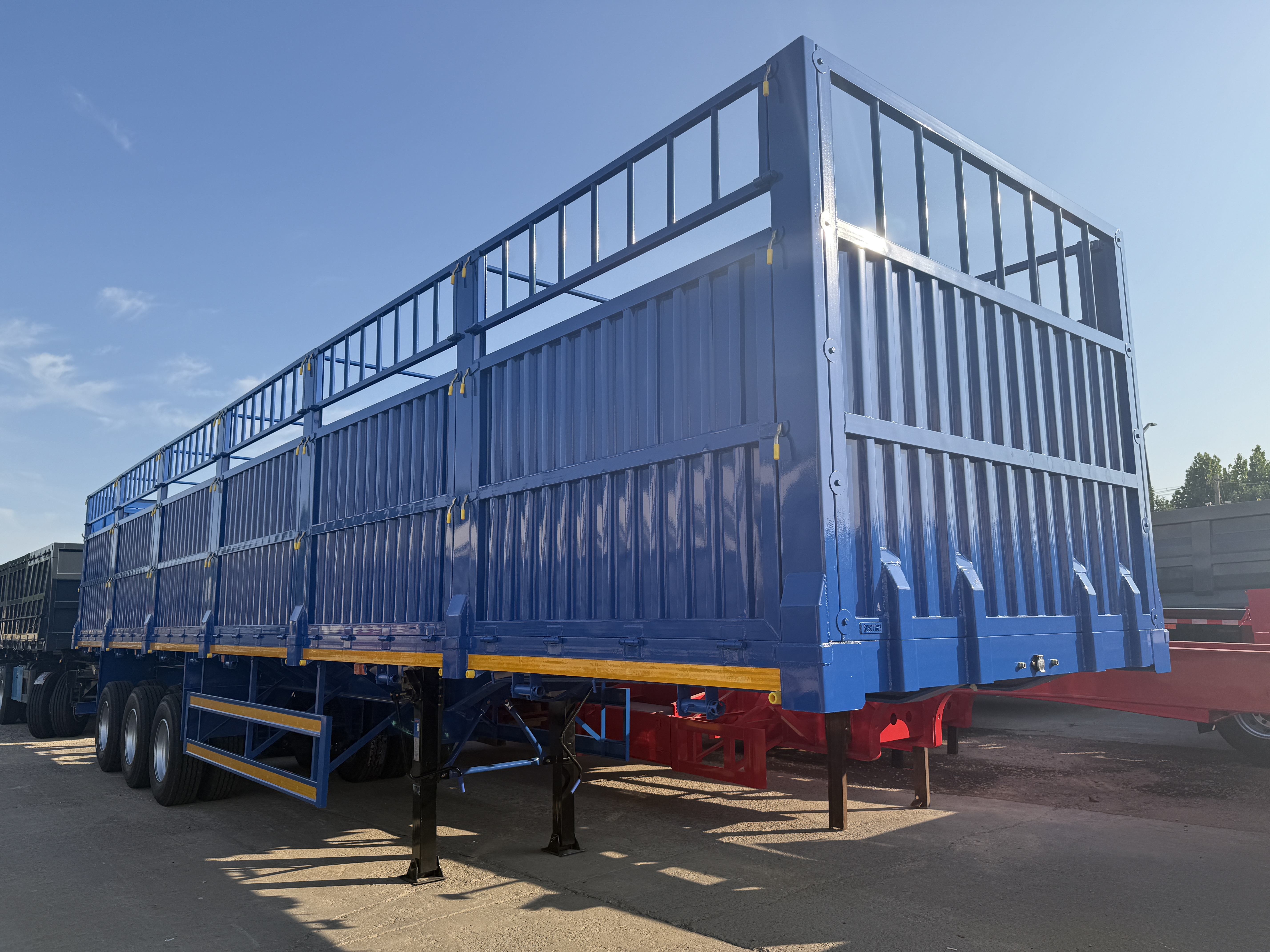
Superior Payload Capacity and Cost Efficiency
Higher Payload Capacity Compared to Rigid Trucks and Conventional Trailers
When it comes to moving big loads across the country, semi trailers are king because they can carry around 30 tons on each run, which is almost twice what those regular trucks manage at about 15 to 20 tons. The reason? They have better space utilization and weigh less when empty, so companies get roughly 40 percent more stuff loaded onto them compared to standard rigs. Logistics folks know this works out financially too since getting the most out of that GVWR means fewer vehicles needed overall. A single semi basically does the work of two traditional trailers when talking about the same amount of goods transported. For industries shipping heavy materials such as steel bars or sacks of grain, these kinds of efficiencies really matter. More weight per trip translates into bigger operations without needing extra trucks sitting around doing nothing.
Reduced Cost Per Ton-Mile Through Economies of Scale
The payload superiority of semi trailers drives down transportation expenses to just $0.08 per ton-mile—30% lower than rigid truck alternatives. This cost efficiency emerges from three interrelated factors:
- Fuel economy: Fewer trips cut diesel consumption by 22% annually
- Labor optimization: Single drivers transport larger loads
-
Infrastructure leverage: Reduced dock congestion and faster turnarounds
When combined with trailer interchangeability across fleets, these savings compound across supply chains. For example, shifting 1,000 tons of freight via semi trailers reduces costs by $12,000 compared to rigid trucks—validating their role in high-volume logistics.
Scalable and Flexible Network Operations
Trailer Interchangeability Across Fleets and Carriers
The standardized coupling systems on semi trailers give them incredible flexibility for operations, making it possible to quickly switch between various tractors and carriers as needed. When drivers change shifts or when equipment needs to be moved around, this ability to swap out trailers saves money that would otherwise be lost during downtime. Logistics companies aren't stuck with one truck for each trailer anymore. They can send their trailers wherever there's demand, which means a single trailer could actually work for several different carriers throughout the course of just one week. These trailers go back and forth between local deliveries and those longer hauls across the country. The fact that these trailers can work with so many different setups cuts down on wasted trips by about 22 percent according to industry reports. That translates into better money made for every trailer on the road.
Seamless Intermodal Integration: Ports, Rail Terminals, and Inland Hubs
The standardized size of semi trailers makes them really well suited for moving goods across different transportation modes. These trailers fit right into rail flatcars, work with container ships, and connect smoothly to warehouse docking areas, which cuts down on how much time is spent loading and unloading cargo. When we look at actual operations at ports, these trailers can switch from ship to rail or rail to truck in about half an hour max. That's roughly twice as quick compared to equipment that doesn't follow standard sizes. The faster movement helps keep traffic flowing better at places where things tend to back up, like inland ports or rail yards. Research from government agencies shows that when companies use these semi trailers in their shipping networks, they get around 40 percent faster freight movement compared to systems that only use one type of transport. Plus, everything still works within the rules set by federal transportation regulations.
Specialized Semi Trailer Configurations for Diverse Cargo Needs
Dry Van, Flatbed, Refrigerated, and Lowboy Semi Trailers Explained
Specialized semi trailer configurations address distinct freight requirements through purpose-engineered designs:
- Dry van trailers feature enclosed, weatherproof boxes for palletized goods, electronics, and non-perishable commodities
- Flatbed trailers offer open decks with removable side rails to transport oversized machinery or construction materials
- Refrigerated trailers maintain temperatures from –20°F to 60°F (–29°C to 16°C) using cryogenic systems, preventing spoilage of pharmaceuticals and perishables
- Lowboy trailers leverage hydraulic lowering mechanisms and multi-axle designs to haul heavy equipment like excavators beneath height-restricted routes
This specialization optimizes cargo integrity while reducing damage claims—critical when transporting sensitive shipments like industrial components or temperature-controlled vaccines over long distances. Selecting the proper semi trailer variant directly correlates with operational compliance and freight safety metrics across supply chains.
Engineered for Performance: Maneuverability, Safety, and Coupling Reliability
Enhanced Maneuverability and Stability in Urban and Highway Environments
Semi trailers handle different kinds of terrain much better than most people realize. The way they're built lets them turn around corners in busy city streets without hitting curbs or causing traffic jams like regular trucks often do. When we look at highways though, those longer wheelbases give semi trailers a real advantage when it comes to staying stable at higher speeds. Engineers have worked hard on how weight gets distributed across these trailers so they don't sway around too much when there's strong wind blowing or drivers need to make sudden moves. Getting forklifts loaded and unloaded becomes easier too because of the extra space between parts of the trailer. All these design choices actually help reduce accidents in cities while keeping cargo safe throughout those long trips across the country.
Kingpin and Fifth-Wheel Coupling Design: Safety and Operational Integrity
When connecting a tractor to a trailer, there's no room for compromise on reliability. Kingpins that meet SAE J1338 standards fit securely into fifth wheel couplings capable of holding around 60,000 pounds. This prevents dangerous detachments when facing heavy loads or sudden changes in road grades. The surfaces are machined with precision to stop any side-to-side movement that could lead to dangerous fishtailing during transport. Truck drivers perform these daily checks as part of their routine, looking closely at wear points and testing how smoothly the coupling articulates. According to recent FMCSA figures from 2024, regular maintenance cuts down coupling failures by more than 90%. For fleet operators, this kind of dependable connection means fewer roadside breakdowns and significantly reduced risk of those terrifying incidents where trailers separate completely from the tractor unit.
FAQs
- What is the payload capacity of a semi trailer? A semi trailer can carry approximately 30 tons per run, nearly doubling the load of conventional rigid trucks.
- How much does using a semi trailer reduce transportation costs? Semi trailers can lower transportation costs by 30% per ton-mile compared to rigid trucks due to improved fuel efficiency, labor optimization, and infrastructure leverage.
- What types of specialized semi trailers are available? There are several types of specialized semi trailers including dry van, flatbed, refrigerated, and lowboy trailers, each designed for specific cargo needs.