EN
EN

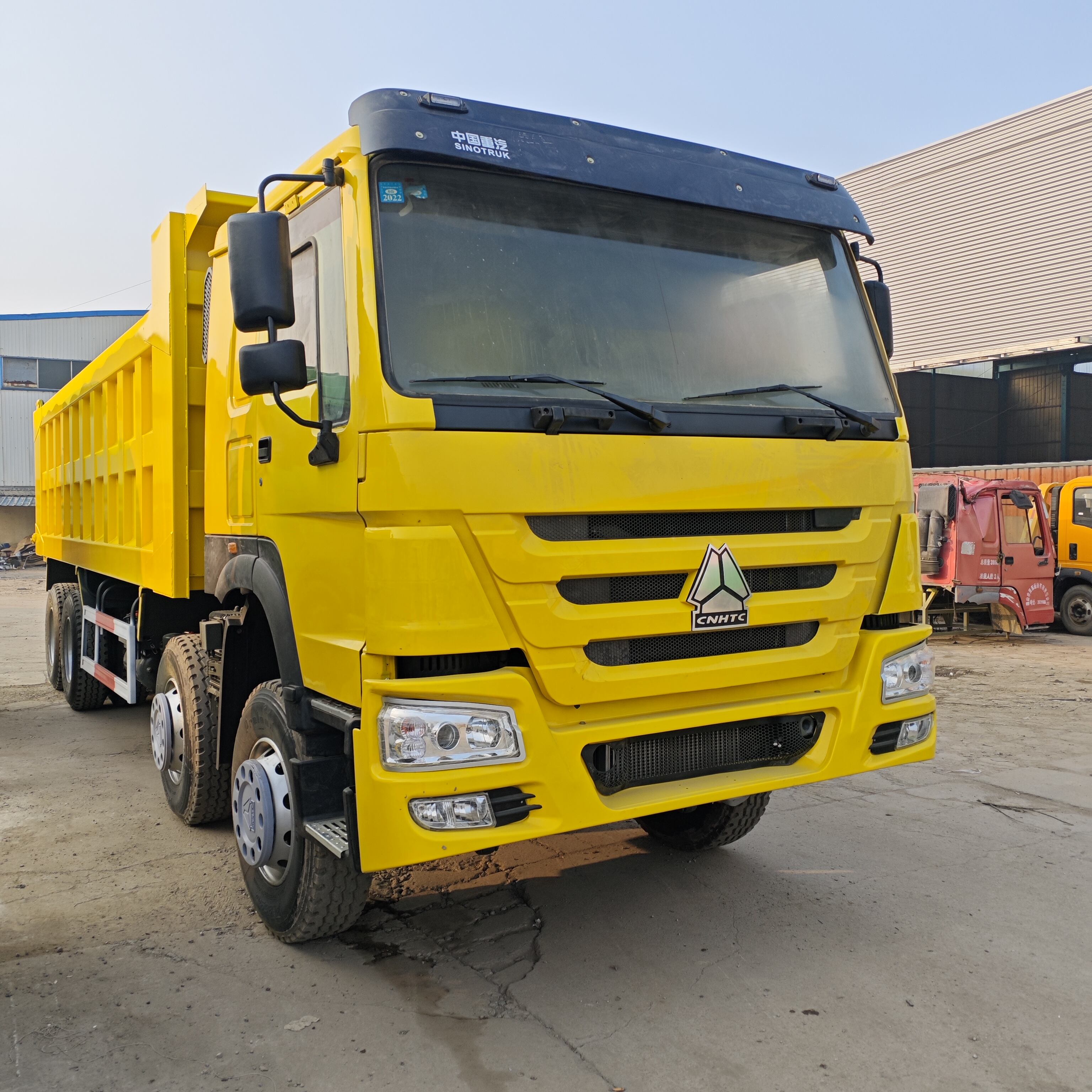
Mechanical Foundations: How Axle Count and Drivetrain Design Define Capability
Decoding the Numbers: What '6x4' and '8x4' Really Mean for Power Delivery and Axle Load Sharing
Heavy duty trucks get their numbers based on how they're built underneath. Take a 6x4 setup for instance. That means there are six wheels total, but only four actually drive the truck forward. Usually we see one steering axle up front and two power axles at the back. When manufacturers go for an 8x4 configuration, they simply add another front axle that doesn't steer, giving us eight wheels altogether with still just four driving them. What this does is spread out the weight better. Instead of putting all that cargo weight on three axles, it gets divided among four, cutting down each axle's burden by around a quarter. This helps keep the truck within legal weight limits without sacrificing what it can carry. And here's something important too: that extra axle lets the truck use special differentials that split power between multiple wheels. Makes all the difference when driving over rough ground where wheels might lose contact with the road surface.
Traction Physics: Why 8x4 Trucks Maximize Effective Grip—Not Just Axle Count—Through Weight Transfer Optimization
The performance edge of 8x4 trucks over 6x4 models comes down to more than just having extra wheels on the ground. The real difference lies in how these vehicles handle weight distribution when speeding up or tackling steep hills. On slopes steeper than 15 degrees, the weight naturally shifts backward, giving better grip at the wheels. Tests on rough terrain have shown that 8x4 setups actually produce around 18 percent more usable power compared to similar 6x4 trucks. Why? Because they've got longer wheelbases that position those driving wheels further back where they can grab onto all that transferred weight when it matters most for traction. Plus, those two front axles make a big difference in keeping the truck pointed straight even when cargo shifts around. Single front axle trucks struggle much more here, showing about 40% more wobble when making turns while loaded down heavily. At the end of the day, it's not just about counting wheels but where exactly those wheels sit relative to each other that creates this extra grip advantage no simple wheel count could ever match.
Payload, Stability, and Regulatory Compliance in Demanding Environments
Payload Gains and Legal Limits: How 8x4 Trucks Leverage Additional Axles to Achieve +15% Payload Within EU/AU Regulations
Weight restrictions on axles are pretty tight across Europe and Australia to keep roads and bridges safe. Single axles can only carry up to 10 tonnes while tandem setups max out between 16 and 20 tonnes. But here's where the 8x4 configuration shines. With four axles instead of the usual three, truck operators actually turn these limitations into something good for their business. The extra axles spread out the total weight over more points touching the ground, which means legal payloads jump by around 15% compared to standard 6x4 trucks. This better weight distribution lets companies haul bigger machinery or more material all at once without stepping over those strict legal limits. What does that mean in practice? A single trip with an 8x4 truck can do what would otherwise take two or three trips from smaller vehicles, making entire fleets work smarter. Mining companies and logistics providers who need to follow EU rules like Directive 96/53/EC or Australia's NHVR guidelines find this kind of capacity boost absolutely essential for staying competitive while still meeting regulatory requirements.
Roll Stability and Real-World Handling: Lower Roll Center and Reduced Lateral Load Transfer in Quarry and Landfill Operations
Trucks with an 8x4 configuration have multiple axles that naturally lower what engineers call the roll center, which is basically the point around which the truck rotates when taking corners. Research into how off-road vehicles behave shows that this particular setup can cut down on sideways weight shifting by somewhere between 20 to 30 percent when driving over rough ground. Because there's less movement of centrifugal force, the tires stay better planted to the road surface even during those tight turns at quarries or when navigating slopes in landfills. The main advantage here is improved stability, making these trucks safer and more predictable in challenging conditions.
- Reduced rollover risk during abrupt maneuvers on graded surfaces
- Predictable steering response when hauling asymmetrical loads
-
Minimized cargo shift across elevation changes
Field data supports these advantages: 8x4 trucks sustain 12–15% faster average speeds through winding mine access roads versus 6x4 counterparts—without compromising safety. Their enhanced footprint also curbs tire slippage and stabilizes trailers when descending loose-surface inclines.
Application-Specific Performance: Where 8x4 Trucks Deliver Critical Advantages
Off-Road Traction Leadership: Field Evidence from Australian Iron Ore Haul Routes and Tropical Earthmoving Sites
When operating in really rough off-road conditions, 8x4 trucks provide better grip than most other models. Not because they have extra driven axles mind you both 6x4 and 8x4 usually come with four driven wheels anyway. What makes them stand out is how the four axle design spreads the weight evenly over all contact points. Take Australian iron ore mines for instance. Those areas have steep hills and loose rock surfaces where standard 6x4 trucks can lose around 40% of their traction effectiveness. But 8x4 models keep moving at steady speeds through these challenges. Tests in the Pilbara region showed that these trucks actually finish routes 18% faster because they shift weight to wheels that still have good grip while climbing slopes. And down in tropical regions dealing with massive amounts of mud after monsoons, 8x4 systems put about 30% less pressure on the ground compared to regular 6x4 trucks. This means operations can continue running smoothly even when other equipment gets stuck. The practical advantage of this setup becomes clear in actual mining operations, construction projects, and resource extraction work where downtime costs money and delays hurt profits.
Total Cost of Ownership: Weighing Fuel, Maintenance, and Uptime Trade-Offs
The 8x4 ROI Equation: Higher Fuel Use (~8% Diesel) vs. Proven Uptime Gains (12–18%) in High-Cycle Operations
The 8x4 truck model actually burns around 8 percent more diesel fuel compared to its 6x4 counterpart because of the extra weight in the drivetrain plus greater rolling resistance. But here's the catch: despite this fuel penalty, many operators find that their total cost of ownership drops quite a bit when these vehicles are used heavily in demanding environments such as mining operations. Real world testing indicates that these trucks stay on the road about 12 to maybe even 18 percent longer between breakdowns. Why? The weight gets spread out better across all those wheels, so parts don't wear down so fast. Tires last longer obviously, but also things like suspensions and the whole drivetrain system experience less strain over time. Maintenance shops report seeing roughly 14% savings on repair bills across the board for companies running these heavier duty configurations regularly.
| Cost Factor | 6x4 Configuration | 8x4 Configuration | Net TCO Impact |
|---|---|---|---|
| Fuel Efficiency | Baseline | -8% | Higher OpEx |
| Maintenance Costs | Baseline | -14% (avg.) | Lower OpEx |
| Uptime Availability | Baseline | +15% (avg.) | Revenue Gain |
| Net TCO/Revenue | Reference | +7–9% ROI | Positive |
In 24/7 operations, a 15% productivity gain offsets the fuel penalty within 18 months. For example, avoiding just two downtime events annually—each costing ~$65,000—covers the extra diesel expenditure. When modeled holistically—including 30% longer tire replacement intervals and fewer transmission overhauls—the 8x4 configuration delivers measurable, sustained ROI.
FAQ
What does the term 8x4 mean in trucks?
In an 8x4 truck configuration, the vehicle has eight wheels altogether, but only four of those wheels are powered to drive the truck.
Are 8x4 trucks more fuel-efficient than 6x4 trucks?
No, 8x4 trucks are generally less fuel-efficient due to the extra weight and rolling resistance, burning around 8% more diesel fuel than comparable 6x4 trucks.
How does an 8x4 configuration affect payload capabilities?
The 8x4 configuration allows for a better distribution of weight across the axles, enabling a payload increase of approximately 15% within EU and AU regulatory limits compared to 6x4 trucks.
In what environments is an 8x4 truck most advantageous?
8x4 trucks are particularly advantageous in demanding environments involving rough terrain, such as mining operations and off-road construction sites, due to their enhanced traction and stability.
Does an 8x4 truck have a lower total cost of ownership compared to a 6x4 truck?
Yes, while the fuel costs are higher, the total cost of ownership decreases due to longer uptime and reduced maintenance costs. This configuration often provides a return on investment through increased operational efficiency.
Table of Contents
- Mechanical Foundations: How Axle Count and Drivetrain Design Define Capability
- Payload, Stability, and Regulatory Compliance in Demanding Environments
- Application-Specific Performance: Where 8x4 Trucks Deliver Critical Advantages
- Total Cost of Ownership: Weighing Fuel, Maintenance, and Uptime Trade-Offs
- FAQ