EN
EN

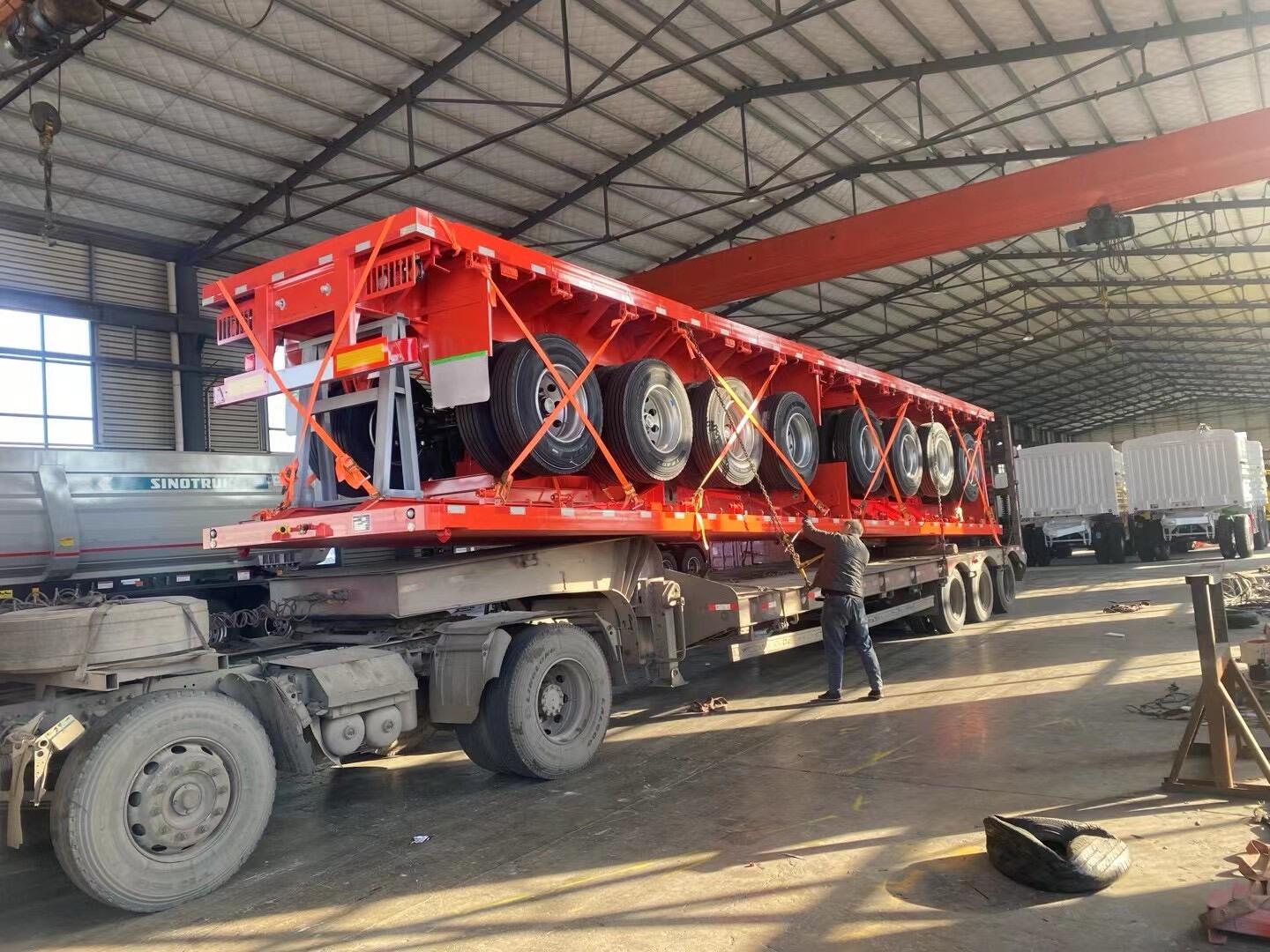
Core Structural and Design Differences Between Low-Bed and Standard Container Trailers
Design Differences Between Low-Bed and Standard Container Trailers
Low bed container trailers come equipped with a gooseneck design that brings the deck much closer to the ground compared to regular models, somewhere around 15 to maybe even 25 percent lower. What this does is get rid of those annoying deck humps we see on other trailers, giving operators a smooth flat surface that works great when transporting big machines or really heavy equipment. Standard container trailers tell a different story though. They have consistent deck heights throughout because they're made primarily for ISO containers and pallets. These designs focus more on making sure everything fits nicely onto loading docks rather than worrying about getting extra space underneath the trailer.
Deck Height, Ground Clearance, and Impact on Cargo Loading
Low bed trailers sit around 24 to 36 inches off the ground, which makes them great for hauling big machines like excavators without running afoul of road height restrictions. The downside? These trailers only clear the ground by about 8 to 12 inches, so drivers need to watch out for bumps and dips along the way. Regular flatbeds give much better ground clearance at 18 to 24 inches. Most warehouses and factories also happen to have docks set at similar heights, meaning operators can load cargo straight onto the trailer without needing extra ramps or equipment. This alignment saves time and reduces wear on both machinery and materials during transport.
Center of Gravity and Load Stability in Heavy-Haul Transport
The lower deck of a low-bed trailer reduces cargo's center of gravity by 30-40%, cutting rollover risk during turns by up to 60% (Heavy Transport Safety Institute 2023). Axle configurations reinforce this advantage:
- Tridem axles on low-beds evenly support 50,000-80,000 lbs loads
- Spread axles on standard models enhance maneuverability but concentrate weight
This makes low-beds the preferred choice for 92% of wind turbine component shipments, while standard trailers dominate routine container logistics.
Load Capacity, Weight Distribution, and Axle Configuration Compared
Weight Capacity of Low-Bed vs Standard Container Trailers
Low bed trailers generally have about 15 to 25 percent more carrying power than regular models. Some special ones can actually take on loads weighing as much as 120 tons compared to what most standard trailers handle around 80 tons according to data from Heavy Haul Transport Association back in 2023. These trucks come with stronger frames built to last longer and sit lower to ground so they distribute weight better across axles which helps meet transportation regulations too. Regular flatbeds might be easier to get onto loading docks but they just don't carry as much stuff efficiently. That makes standard trailers pretty poor choices when moving heavy materials or big items through factories and warehouses where space matters most.
How Axle Configuration Affects Weight Distribution and Road Compliance
Axle setups determine adherence to regional weight laws. Key configurations include:
| Axle Type | Weight Distribution | Ideal Use Case |
|---|---|---|
| Tandem (2 axles) | 18-22 tons/axle | Urban logistics |
| Tri-Axle | 24-28 tons/axle | Mining equipment haulage |
| Quad-Axle | 30+ tons/axle | Oversized infrastructure |
Low-bed tri-axle and quad-axle systems spread loads across more contact points, reducing pavement pressure by up to 40% compared to tandem setups. This helps avoid fines exceeding $7,500 per incident in regulated zones (DOT Compliance Report 2024).
Case Study: Overload Risks With Standard Trailers in Mining Operations
Looking at data from 47 mines across Western Australia in 2023 showed that regular trailers were responsible for around 34 percent of all overload problems when transporting parts for crushers. When mine operators made the switch to low-bed trucks instead, they saw their violation rates drop dramatically by about 82%. Why? These newer models come with better axle configurations and built-in weight monitoring systems that actually work. Most of these overload issues (about 63%) happened because drivers simply miscalculated how much weight they could safely carry based on trailer height. And this isn't just paperwork either the financial hit adds up too, with each mining location facing roughly $290k in fines and lost time every year due to these kinds of mistakes.
Ideal Applications Across Construction, Mining, and Industrial Transport
Transporting Oversized Equipment Using Low-Bed Container Trailers
When it comes to transporting heavy machinery like excavators, turbine components, or those massive mining drills that barely fit on standard equipment, low bed trailers become absolutely necessary. Around 83 percent of all oversized mining shipments need deck heights below 24 inches just to clear bridges and tunnels safely something regular flatbeds simply cannot handle. What makes these specialized trailers work so well? The secret lies in their super strong frames combined with multiple axles that distribute weight across several points. This setup allows them to carry incredibly heavy payloads over 80 tons in fact industrial boilers and entire modular refinery sections get moved this way regularly without incident.
Standard Container Trailers in Routine Industrial Logistics
Most everyday freight moves on standard trailers, covering around 90% of what needs shipping when nothing special is required. These include things like pallets stacked high, bulk raw materials, and all sorts of boxed merchandise. The deck height sits right between 48 and 53 inches, which lines up perfectly with most loading docks. This match cuts down loading time significantly at each stop, saving anywhere from half an hour to almost three quarters of an hour compared to those lower bed trucks. With modern tandem axles, these rigs can legally haul up to 40 thousand pounds across US highways without needing extra paperwork. Makes sense why so many companies stick with them for their routine trips between warehouses and distribution centers where getting stuff there fast matters most.
Growing Use of Modular Low-Bed Solutions in Infrastructure Projects
More and more infrastructure work is turning to those adjustable low bed trailers when moving things like bridge parts, wind turbine components, and factory-made building sections. A recent industry study from last year shows that around two thirds of all new road construction projects are using these special trailers with their expandable decks and sides that can be taken off as needed for different sized loads. The flexibility saves money too - companies report cutting equipment expenses by nearly 20% over traditional fixed frame options. This makes a big difference particularly where there are tight regulations on how much weight each axle can carry, which is definitely the case across Europe and down under in Australia.
Legal Compliance, Height Restrictions, and Route Planning Challenges
Regional Load Height Limits and Legal Regulations for Container Trailer Transport
In most places, trucks can carry loads up to around 13.6 feet high without needing special permission, but things get tricky when approaching bridges or tunnels where some spots only allow about 12.5 feet clearance. The low bed trailer option comes into play here since these have decks sitting between 18 and 24 inches off ground level, which gives drivers roughly 14 percent extra headroom compared to regular trucks whose decks sit much higher at 42 to 48 inches. This makes navigating under those pesky low clearance structures a lot easier for haulers. Anyone planning long hauls really needs to check out reliable resources such as the National Transportation Atlas Database before hitting the road. Construction work and seasonal variations often change what's allowed where, so getting updated info is absolutely critical for staying compliant throughout the journey.
| Compliance Factor | Low-Bed Trailer | Standard Trailer |
|---|---|---|
| Max Typical Cargo Height | 12.1 ft | 9.4 ft |
| Permit-Free Zones | 28 states | 12 states |
| Avg. Violation Fines | $2,800 | $4,200 |
Route Planning Considerations for Non-Standard Loads
Moving non-containerized equipment demands precise route surveys to avoid low bridges, narrow roads, and elevation hazards. A 2023 analysis showed 37% of standard trailer routes included height-restricted sections, versus just 14% for low-bed configurations. Advanced routing software incorporating real-time alerts and elevation data has reduced rerouting delays by 63% in pilot programs.
Permit Requirements and Bypass Strategies for Oversized Cargo
All 50 states require permits for cargo wider than 8.5 feet (2.6 meters), with processing times from 48 hours (Texas) to 14 business days (California). Effective bypass strategies include:
- Modular Trailers: Dividing loads into sub-13.6-foot sections
- Night Transport: Leveraging curfew exemptions in 72% of metro areas
- Infrastructure Mapping: Using U.S. DOT data identifying over 23,000 low-clearance bridges
Penalties for non-compliance rose 22% in 2023 under updated Federal Highway Administration guidelines, with repeat offenders facing equipment impoundment in 18 states.
Operational Costs, Maintenance, and Long-Term Efficiency
Cost Comparison: Low-Bed vs Standard Container Trailers
The initial price tag on low bed trailers runs about 35 to maybe even 45 percent higher than regular models because their frames need extra reinforcement and the axle systems are just more complicated overall. But wait there's something else going on here too these trailers actually pay off in the long run when hauling really heavy stuff. According to some recent research from last year's Freight Efficiency Study, operators report around 18% better fuel efficiency per ton mile when moving cargo that weighs over 40 tons. For everyday container work though, standard trailers still make more sense financially speaking since they don't eat through tires as fast and require far less maintenance down the road.
Maintenance Demands and Durability in High-Utilization Environments
Low-bed trailers require bi-monthly axle lubrication and annual suspension overhauls due to high-stress operations. Standard models need only periodic brake checks and tire rotations. Despite requiring 22% more maintenance annually (Industrial Transport Quarterly 2022), low-beds benefit from hardened steel construction, lasting 12-15 years compared to 8-10 years for standard units.
Total Cost of Ownership for Industrial and Heavy-Haul Operations
Low bed trailers actually save money over seven years for companies that constantly haul big loads. The numbers show around 28% less in overall costs compared to other options when dealing with really large cargo. On the flip side, if a business mainly transports containers shorter than 40 feet and weighing under 30 tons, regular trailers still come out ahead financially. These standard units cut down on expenses by about 37% in most light industrial applications. Matching the right trailer type to what needs to be hauled makes a huge difference too. When companies get this alignment right, they avoid those costly breakdowns caused by using the wrong equipment. Logistics data suggests this proper matching cuts down on breakdown risks by roughly 60 something percent.
FAQ Section
What are the main differences between low-bed and standard container trailers?
Low-bed trailers have a gooseneck design that allows for lower deck height, making them suitable for transporting oversized and heavy machinery. Standard trailers have consistent deck heights and are primarily used for ISO containers and palletized goods.
Why are low-bed trailers preferred for certain industrial applications?
Low-bed trailers offer better load stability, lower center of gravity, and can handle heavier loads more efficiently than regular trailers.
What factors affect the choice of axle configuration in trailers?
Axle configuration is determined by the intended use of the trailer, weight distribution needs, and regional weight laws.
What legal compliances should be considered when using low-bed trailers?
Operators should be aware of load height limits, permit requirements, and the need for precise route planning to avoid legal violations.
Are low-bed trailers more cost-effective in the long run?
For businesses that regularly transport heavy loads, low-bed trailers can be more cost-effective over time due to better fuel efficiency and longer lifespan despite a higher initial cost.
Table of Contents
- Core Structural and Design Differences Between Low-Bed and Standard Container Trailers
- Load Capacity, Weight Distribution, and Axle Configuration Compared
- Ideal Applications Across Construction, Mining, and Industrial Transport
- Legal Compliance, Height Restrictions, and Route Planning Challenges
- Operational Costs, Maintenance, and Long-Term Efficiency